

Why Boredom in Class Might Be the Most Underrated Teacher
Most articles about education talk about engagement, technology, or motivation. Almost none talk about boredom — and that’s a mistake, because boredom might be doing more for young minds than we give it credit for.
The Problem With “Always Engaged” Classrooms
Modern education has become obsessed with keeping students constantly stimulated. Bright slides, gamified quizzes, short videos — the goal is to never let a student’s attention drift. But psychologists who study attention and creativity have found something counterintuitive: when the brain isn’t being fed constant stimulation, it starts generating its own ideas. This is called the “default mode network” — the part of the brain that activates during idle moments, daydreaming, or mild boredom.
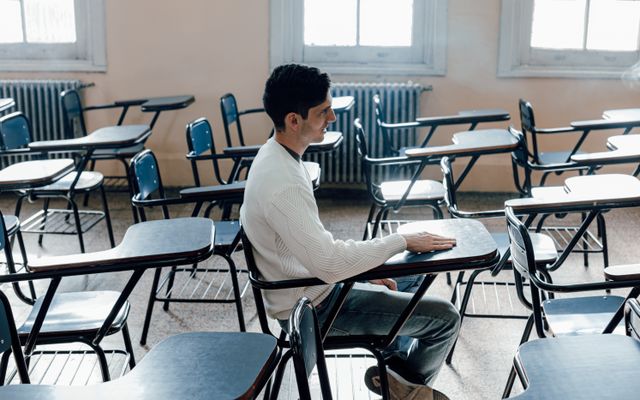
In other words, a student staring out the window during a slow lecture isn’t necessarily wasting time. Their brain may be quietly connecting ideas in the background, something that rarely happens when every second is packed with flashy content.
What Gets Lost When We Eliminate Boredom
Problem-solving patience — Students who are never allowed to sit with an unsolved problem for more than a few seconds (because the next slide or notification is already there) lose the ability to tolerate difficulty. Real learning often requires sitting with confusion before clarity arrives.
Self-generated curiosity — When every question is answered instantly by a screen, students stop forming their own questions. Boredom often forces a mind to ask, “What should I think about now?” — the seed of curiosity.
Deep focus over shallow novelty — Constant stimulation trains the brain to crave novelty, not depth. This is part of why sustained reading or long-form problem-solving feels harder for many students today.
How Teachers Can Use This
This isn’t an argument for making classrooms dull on purpose. It’s a case for deliberately leaving unstructured space — a few minutes with no instructions, no screen, no immediate task — and trusting students to fill it themselves. Some practical ways:
End a lesson with an open question and no follow-up activity, letting it sit unresolved until the next class.
Allow “thinking time” after a hard question instead of rushing to reveal the answer.
Occasionally assign a task with no clear structure — a blank page and a broad theme — and see what students build.
The Bigger Point
Education systems chase engagement metrics the way social media chases watch-time. But minds, unlike apps, need friction to grow. Boredom, used carefully, isn’t the enemy of learning — it might be one of its last surviving teachers.