








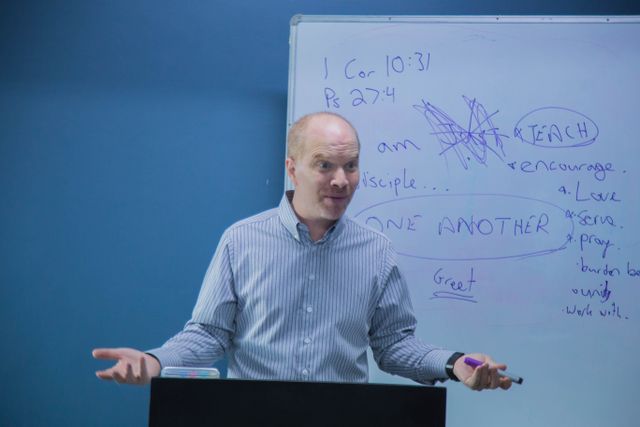

Learn by Teaching an Imaginary Student
The Reverse Study Guide: Learn by Teaching an Imaginary Student
Every study guide tells you to take notes, highlight, and review. Almost none tell you to argue with someone who doesn’t exist. This is the idea behind the “reverse study guide” — a technique built entirely around teaching, not reading. It sounds strange at first, maybe even a little silly, but it exposes something most study methods hide from you: the difference between recognizing information and owning it.
Why Most Studying Feels Productive But Isn’t
Here’s a familiar scene. A student reads a paragraph, nods along, thinks “yeah, that makes sense,” and moves to the next paragraph. An hour later, they close the book feeling like they’ve studied. But if you asked them to explain that first paragraph from memory, in their own words, many would stumble.
This gap has a name in cognitive psychology: the illusion of competence. When your eyes pass over familiar-looking material, your brain registers familiarity and mistakes it for understanding. Highlighting is especially guilty of this — the physical act of marking a sentence yellow feels like effort, but it doesn’t require your brain to actually process or restructure the information. You’re just tagging text, not learning it.
Teaching breaks this illusion immediately, because teaching has no hiding place. Either you can produce a clear explanation, or your sentences fall apart halfway through. There’s no partial credit for “I basically get it.”
The Core Idea
Instead of studying material to understand it, you study material to explain it — out loud, to an imaginary student who keeps asking “why?” This is different from ordinary active recall. Active recall tests whether you remember something. Teaching an imaginary student tests whether you understand it deeply enough to defend it, simplify it, rephrase it on the fly, and answer unexpected follow-up questions — which is a much higher bar.
Think about the difference between a student who has memorized “photosynthesis converts sunlight into chemical energy” and one who can explain why plants need this process, what would happen if one step failed, and how they’d describe it to a curious eight-year-old. Only the second person has actually learned it.
How to Actually Do It, Step by Step
1. Pick a concept, not a whole chapter.
Ambition is the enemy here. Choose something small enough to explain in two or three minutes — a single formula, one historical cause, a specific biological process, one economic principle. If your chosen topic needs fifteen minutes to explain, it’s too big; break it down further.
2. Talk out loud as if teaching someone who knows nothing about it.
Not silently in your head — actually speak, even if it feels awkward. Speaking forces your brain to convert loose, half-formed thoughts into complete, ordered sentences, which is a much harder task than passively agreeing with a textbook. Use plain language. Avoid technical terms unless you can also explain what they mean. If you catch yourself saying “it just is” or “you just have to memorize this part,” stop — that phrase is a red flag. It usually means you’ve memorized the shape of an idea without understanding its substance.
3. Invent a skeptical follow-up question.
This is the step most people skip, and it’s the most valuable one. After your explanation, imagine your invisible student isn’t satisfied. They ask: “But why does that happen?” “What if this variable changed?” “How is this different from the similar concept we learned last week?” Then you have to answer that too, on the spot. This step turns passive explanation into active problem-solving, which is much closer to what an exam actually demands.
4. Notice exactly where you got stuck.
At some point in this process, your explanation will falter — a pause, a vague hand-wave, a sentence that trails off. That exact point is valuable information. It tells you precisely which sliver of the topic is weak, rather than leaving you with a vague sense of “I should review this whole chapter again.” Write that specific sticking point down.
5. Go back and fix only that gap.
Re-read or re-watch material aimed specifically at the point where you got stuck — not the entire topic from the beginning. This keeps your review efficient and targeted instead of repetitive.
6. Re-teach it again, from scratch.
Once you’ve patched the gap, explain the whole concept again from the start, out loud, without notes. If it flows smoothly this time, you’re done. If you stumble again, even briefly, repeat the process. Two or three rounds is usually enough for a single concept to become genuinely solid.
A Sample Routine You Can Use Today
Study a topic normally for about 20 minutes — reading, watching a lecture, or working through examples.
Close your notes and spend 5 minutes explaining it out loud to no one, as if teaching a beginner.
Ask yourself one hard follow-up question and answer it.
Write down the single moment where your explanation broke down.
Spend 5–10 minutes fixing just that gap.
Explain the whole thing again, start to finish.
Repeated across an entire syllabus, this creates something most students never have going into an exam: an honest, specific map of exactly which parts of the material are shaky, instead of a vague, anxious feeling that “I should probably go over everything one more time.”
Why This Beats Passive Review for Exams
Exams rarely ask questions in the same words or order as your notes. They rephrase, combine ideas, and test edge cases. A student who has only ever recognized material in its original form often freezes when a question is worded differently than expected. But a student who has repeatedly rebuilt the explanation from scratch, in their own words, has already practiced the exact skill an exam demands: reconstructing understanding under pressure, without a script to lean on.
There’s also a quieter benefit. Explaining things out loud tends to reduce exam anxiety, because by the time the real exam arrives, the material doesn’t feel like something borrowed from a textbook — it feels like something you actually know and can speak about confidently, the same way you’d explain your own opinion rather than someone else’s.
The Takeaway
Most study advice focuses on input — read more, highlight more, revise more. The reverse study guide flips that logic around: real understanding reveals itself through output, not input. Anyone can convince themselves they understand something by reading it one more time. Far fewer can explain it clearly, defend it under a skeptical question, and do it again without stumbling. If you can teach a concept convincingly to someone who isn’t even in the room, you’ve probably already learned it well enough for the person who will be grading your answer.